
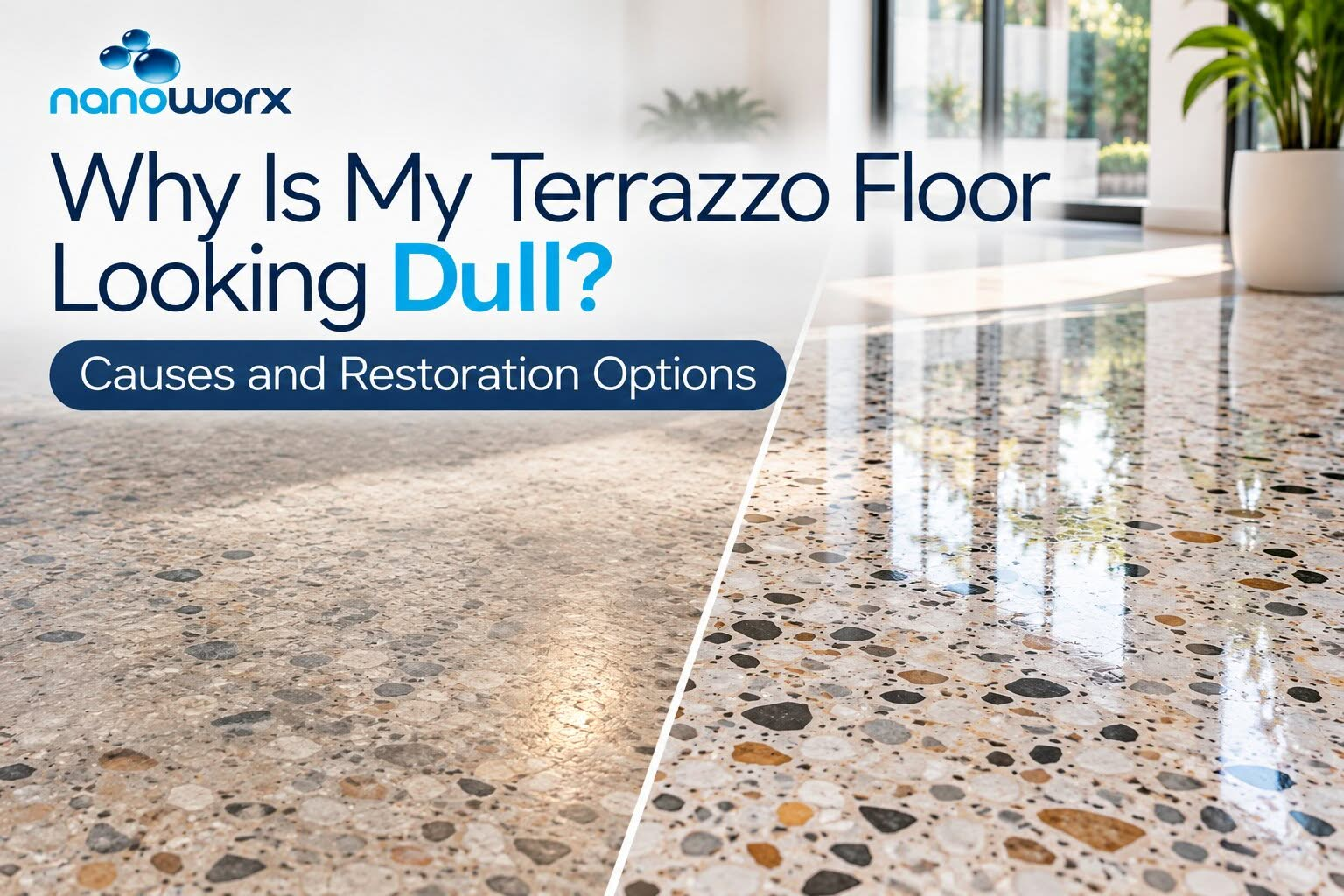
Quick answer: A dull terrazzo floor is usually caused by surface wear, fine scratches, or residue, not permanent damage. Light dullness may clean away, but deeper wear needs professional refinishing.
Terrazzo is a composite of stone chips set in cement or resin, then ground and polished to a smooth finish. Even well-kept floors fade over time. If you have a dull terrazzo floor, the shine can often be restored once the cause is identified.
This guide explains the causes, the restoration options, and when to call a specialist. Nanoworx, a Perth stone and glass restoration company, has completed thousands of projects over 10 years.
A terrazzo floor becomes dull when its polished surface loses smoothness, so light scatters instead of reflecting cleanly. The shine is physical, so wear and residue both reduce it.
| Cause | Effect on the surface |
| Grit and foot traffic | Fine scratches that scatter light |
| Harsh or unsuitable cleaners | Etching or a cloudy film |
| Product and soap residue | Hazy build-up that mutes colour |
| Worn or missing sealer | Stains and wear take hold faster |
| Prolonged moisture | Marks and uneven appearance |
Dullness is a loss of clarity, not always visible damage. Common signs include:
A terrazzo floor losing its shine is usually responding to abrasion, chemistry, or lost protection. Abrasion comes from grit that gradually scratches the polish. Chemistry covers cleaners or spills that etch the finish or leave residue. Lost protection means the sealer has thinned, so stains and wear reach the stone directly.
These causes often overlap, which is why a proper assessment should come before any treatment.
Cleaning restores shine only when the dullness comes from dirt or residue. It cannot remove scratches or etching, because those are changes to the surface itself.
| Condition | Will cleaning help? |
| Surface dirt | Yes |
| Soap or product film | Often |
| Fine scratches | No |
| Etching | No |
| Worn sealer | No, resealing is needed |
If the floor still looks flat after a thorough clean, wear is the problem and restoration is the next step.
Restoring worn stone surfaces means removing surface damage and rebuilding an even finish. Nanoworx restores terrazzo alongside marble, travertine, and concrete. Options run from least to most intensive:
| Option | Best for |
| Deep clean | Residue and light dullness |
| Polishing | Mild scratching and uneven sheen |
| Refinishing | Widespread wear and etching |
| Repair and colour matching | Chips, cracks and damaged sections |
| Sealing and protection | Preventing the problem returning |
Dull terrazzo flooring needs refinishing when cleaning no longer changes its appearance. Refinishing a terrazzo surface is the right choice if you see:
Terrazzo refinishing is a staged process that removes surface damage and restores an even polish. Typical steps are:
Nanoworx uses Italian-made diamond tooling and machinery. Its Terrazzo Restoration in Fremantle and Terrazzo Match and Repair in Crawley projects show this work on Perth floors.
Nanoworx recommends scheduled maintenance after restoration to reduce the risk of costly rectification later.
Consider a specialist when:
Nanoworx offers a free consultation and quote, plus a pricing guide on its website.
A dull terrazzo floor is rarely beyond help. Identify the cause, clean if residue is likely, and choose professional refinishing when wear is the issue.
With over 1,400 projects completed over the course of 10 years, Nanoworx’s stone care expertise can repair and protect your terrazzo floor if it is losing its lustre.
Prolonged moisture can affect some terrazzo surfaces, especially where residue or contaminants remain. The cause should be identified before treatment.
Uneven polishing, differing wear, or inconsistent previous treatments can leave different sheen levels. Further refinement may be needed.
Yes. Fine scratches scatter reflected light, reducing clarity and depth even when the floor is clean.
Uneven foot traffic, cleaning patterns, past treatments, and localised wear create different levels of reflectivity.
Many can be significantly improved. The result depends on wear depth, existing damage, previous treatments, and overall condition.

© Nanoworx • Site by c4 Digital Agency