
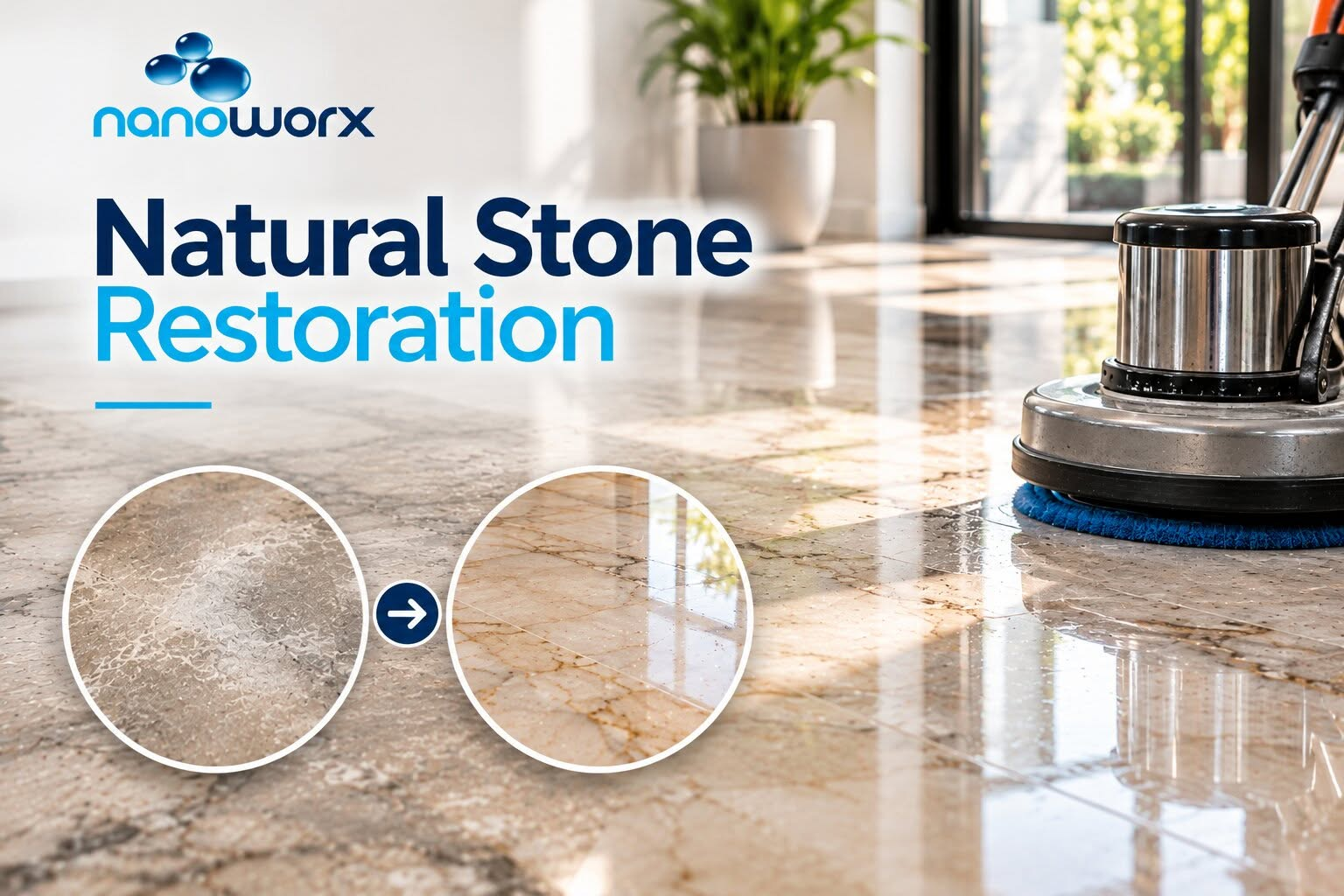
There is no universal calendar for natural stone restoration frequency. Marble, travertine, terrazzo, and other stone surfaces wear differently depending on how they are used, maintained, and exposed to everyday conditions. Instead of waiting until a surface looks severely damaged, the better approach is to monitor its condition and arrange professional restoration when dullness, scratches, stains, etching, or uneven finishes begin affecting its appearance.
For property owners, effective natural stone maintenance combines routine care with professional assessment and restoration when the surface requires more than cleaning.
No. Natural stone restoration does not follow one fixed timetable for every surface. The appropriate frequency depends on the stone, its finish, traffic levels, maintenance routine and visible condition.
Nanoworx recommends preventative scheduled maintenance cleaning after restoration to help minimise the need for major rectification work. This means restoration should be considered as part of an ongoing maintenance strategy rather than something that only happens after significant deterioration.
A practical approach is to arrange an assessment when:
Several factors influence how frequently a stone surface may require professional attention. Natural stone restoration frequency can vary considerably between a lightly used residential surface and a heavily trafficked commercial floor.
| Factor | Why it matters |
| Stone type | Different stones have different characteristics and restoration requirements. |
| Traffic | High-use floors and commercial surfaces can show wear sooner. |
| Surface finish | Polished and other finishes can show changes in appearance differently. |
| Cleaning routine | Unsuitable cleaning methods can contribute to surface wear. |
| Existing damage | Scratches, stains, etching, and dullness may indicate restoration is needed. |
| Protection | Sealers and protective films can support longer-term preservation. |
Nanoworx works with marble, travertine, terrazzo, concrete, and glass surfaces, providing restoration and protection according to the requirements of each project.
A natural stone surface may need professional restoration when routine cleaning can no longer restore its previous appearance. Persistent surface problems can indicate that the stone requires specialist techniques rather than more aggressive cleaning.
Look for signs such as:
Nanoworx’s marble polishing service includes assessment before the restoration process, followed by techniques such as grinding, honing, and polishing according to the condition and desired finish.
Different natural stone surfaces should be assessed according to their condition rather than assigned an identical restoration interval.
Marble: Marble floors, walls, benchtops, counters and bars may require restoration when stains, scratches, dullness or loss of lustre become noticeable. Nanoworx specifically provides marble polishing and restoration for these surfaces.
Travertine: Travertine restoration can involve preparation, honing, polishing and finishing. Nanoworx also recommends sealing as part of its travertine refinishing process to help protect the restored surface.
Terrazzo: Older terrazzo can be restored rather than automatically replaced. Nanoworx restored a 100-year-old terrazzo floor in Fremantle, demonstrating how professional restoration can bring worn stone surfaces back to life.
Natural stone maintenance is ongoing care designed to preserve a surface, while professional restoration addresses wear, damage, or deterioration that routine maintenance cannot resolve.
Maintenance can include appropriate cleaning, sealing, and preventative care. Restoration is more intensive and may involve processes such as cleaning, repairing, honing, polishing, or refinishing, depending on the surface.
Nanoworx specifically promotes protection and maintenance after restoration, including scheduled maintenance cleaning to help reduce future major rectification work.
Yes. Consistent natural stone maintenance can help preserve the appearance of restored surfaces and reduce premature deterioration. However, maintenance does not eliminate the need for professional restoration when a surface develops significant wear or damage.
Nanoworx recommends sealers and optional protective films as part of its approach to protecting stone from future wear. Its stone protection services include Invisifilm Marble Self-Healing Protection Film, antibacterial nano coating, and DIY protection film.
Restoration can be worth considering when the underlying stone remains suitable, but its appearance has deteriorated. Professional restoration may address stains, scratches, dullness, and worn finishes without immediately resorting to replacement.
Nanoworx’s experience includes restoring a 100-year-old terrazzo floor in Fremantle and marble surfaces that had developed significant wear and staining. Its website also documents a client project involving marble benchtop restoration followed by application of self-healing film, after years of etching and marks.
Nanoworx specialises in stone restoration and protection across marble, travertine, terrazzo, concrete and other surfaces. Its team has completed thousands of restoration projects over 10 years, with qualified stone masons and tilers and regular in-house training.
The company assesses the surface before determining the required restoration approach. Its services include marble polishing, terrazzo finishing, concrete polishing, travertine restoration, heritage building restoration, monument restoration, stone facade restoration, and tile and grout restoration.
For property owners considering professional restoration, Nanoworx’s experience with stone surfaces provides a useful starting point for understanding the company’s restoration and maintenance capabilities.
There is no single answer to natural stone restoration frequency because stone surfaces do not all wear at the same rate. The right time for professional natural stone restoration is determined by the stone’s condition, usage, finish, maintenance history, and visible signs of deterioration.
Rather than waiting for severe damage, regular assessment and preventative maintenance can help identify restoration needs earlier. With more than 1,400 restoration projects across more than a decade, Nanoworx combines stone restoration, polishing, and protective solutions to help Perth property owners maintain and preserve their stone surfaces.
Yes. Professional restoration can be considered when early signs of wear, dullness, staining, or surface deterioration begin affecting the appearance of the stone.
Yes. Nanoworx works with different surfaces, including marble, travertine, terrazzo, and concrete, and restoration requirements vary according to the condition and characteristics of each surface.
No. Nanoworx presents sealing and protective solutions as part of ongoing preservation, while restoration addresses worn or damaged surfaces. Protection can support maintenance but does not remove the need to assess surface condition.
Unsuitable cleaning methods can contribute to surface problems. Nanoworx’s restoration services are designed to address surfaces where routine cleaning is no longer sufficient.
If dirt or residue is the primary issue, appropriate cleaning may improve the surface. Persistent dullness, scratches, staining, etching or uneven finishes may indicate that professional restoration should be considered.
The restoration process is selected according to the stone and its existing condition. Nanoworx assesses each project and uses techniques such as grinding, honing, and polishing where appropriate to achieve the required finish.
Nanoworx states that it has completed more than 1,400 restoration projects over 10 years, covering stone and glass restoration work.
Yes. Nanoworx offers protection and maintenance solutions, including sealers, protective films, and scheduled maintenance cleaning to help preserve restored stone surfaces.

© Nanoworx • Site by c4 Digital Agency